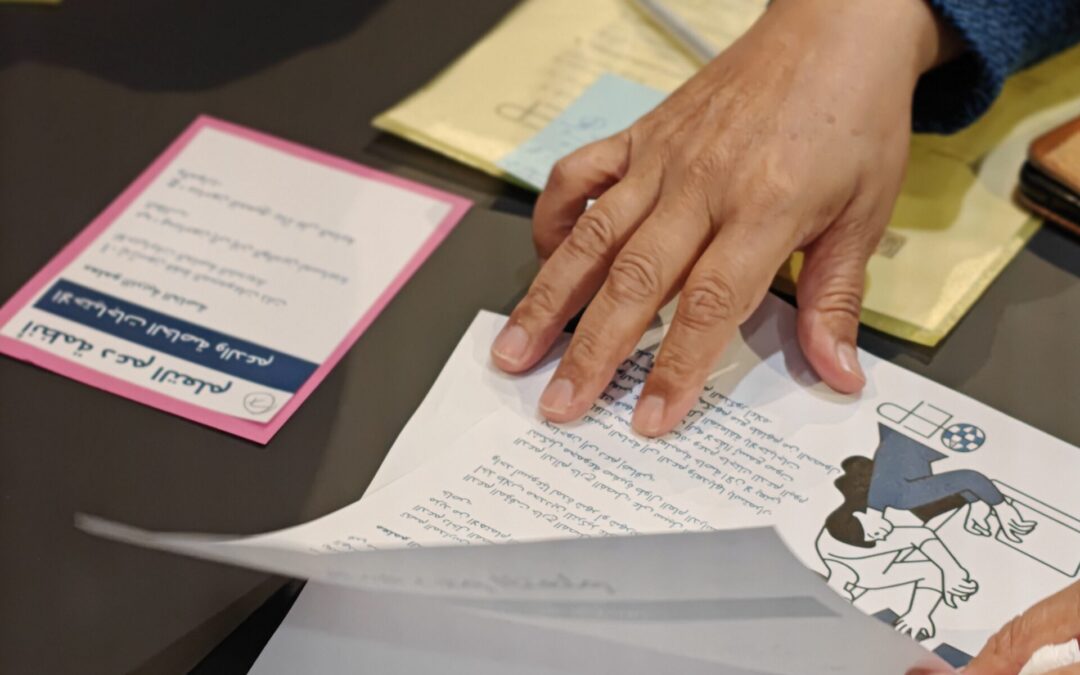
Over the course of 2025, our team ran bi-weekly online workshops and two weeks of intensive study visits in a language we do not speak, using a typography we cannot read.
At first glance, that sounds like a recipe for a logistical nightmare. And to be honest, it was not always easy. Working through a language barrier slows things down. It makes the simple things just a little bit harder. But it also opens a door to radical accessibility.
At OEP, we’ve facilitated multilingual training before, from our work in Ukraine to various international cohorts, but our recent project with over 70 Palestinian education professionals took our toolkit to the next level. The goal was to ensure that our training reached as many people as possible without sacrificing a drop of quality.
Here is how we proved that in the modern day, language is only a barrier if you allow it to be.
The Best of Both Worlds
First and foremost, it is important to not forget about humans. For our online workshops, we utilized simultaneous interpreters and professional translators for our core materials. This ensured that the tone, specific pedagogical vocabulary, and cultural context remained intact. Professionals are still there for a reason!
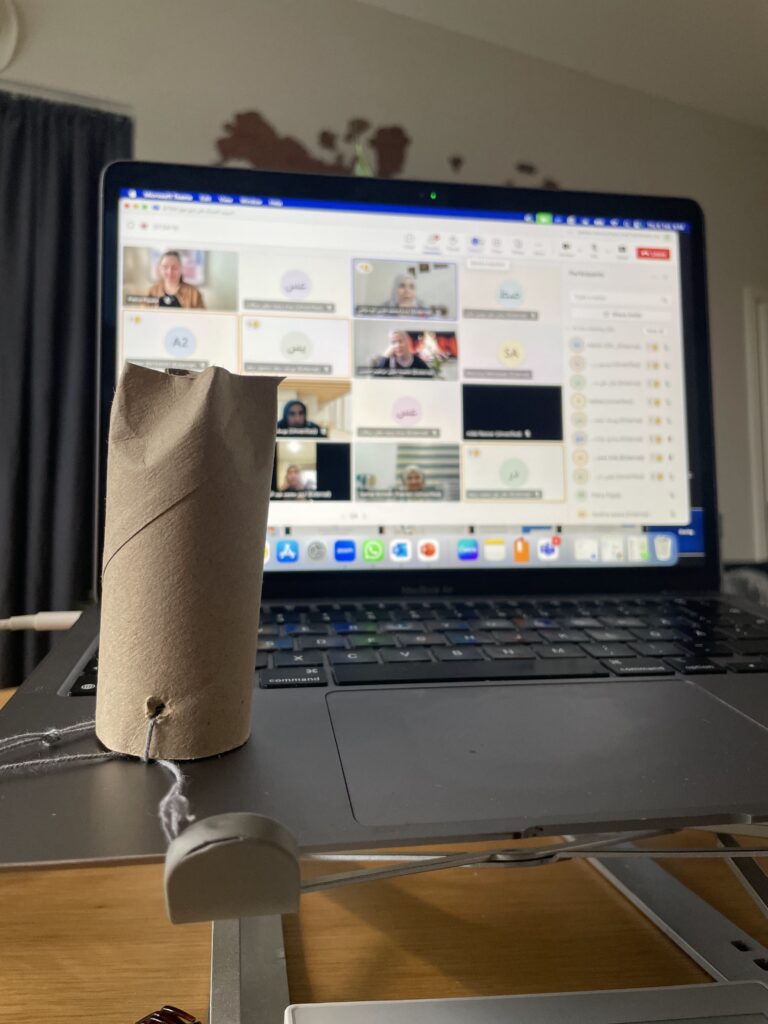
It also meant that us trainers were able to communicate with each other in whatever language was most comfortable: sometimes I asked a question in English, and one of the trainers responded in Arabic. The participants were listening to an Arabic “Channel” in Zoom, which meant that for them, the language never changed. Those who spoke both languages could choose to stay in the main audio channel, listening to the original speaker at all times.
Using a professional translator didn’t mean we just went on about our lives as if nothing had changed. In order to keep our workshops interactive, we had to make changes to our workflow:
Tighter and Earlier Deadlines: Since we don’t just lecture based on slides made months ago, but we react to participant assignments, we had to find the sweet spot for deadlines. If working in English, we could have left finalizing the materials to a very late stage. Now, however, we needed enough time to review participants’ work, tweak our materials based on their progress, and still get those materials to the translators.
Learn to use Speaker Notes: Personally, I’ve never been a big “speaker notes” person. That is, before this training. Presenting slides in Arabic while reading English cues in the notes has now become second nature. I also got very creative with all kinds of icons and other visual cues that helped me ensure that I’m reading the right section at the right time.
On-the-Fly Translation: The chatbox is a lovely tool during workshops – people get a chance to ask quick questions, call for help, or shout out a thank-you, all without disturbing the speaker. However, when it fills up with text you cannot read, it’s sometimes difficult to keep going – are those good morning wishes from people arriving late, or is the link I shared not working? With the interpreter’s main focus on spoken content, we used tools like Google Lens to translate Arabic chat messages in real-time.
Interactive by Design
To keep things from becoming a one-way lecture, we used lots of digital tools like Mentimeter, Padlet, and Zoom polls. The secret to make this work was very strategic wording.
We became proficient at phrasing questions to prompt straightforward answers, without defaulting to “Yes” or “No”. This helped us ensure that our translations were accurate, but also made us thoroughly think about the wording and purpose of everything and anything we asked!
The benefit of written responses was that even the quieter participants got an equal chance to give input. Unstable connections were less of a hurdle.
Us non-Arabic speaking facilitators could keep up with the conversation very easily using Google Lens, and other translation tools – while being supported by our Arabic-speaking colleagues.
The Ultimate Test: In-Person Interaction
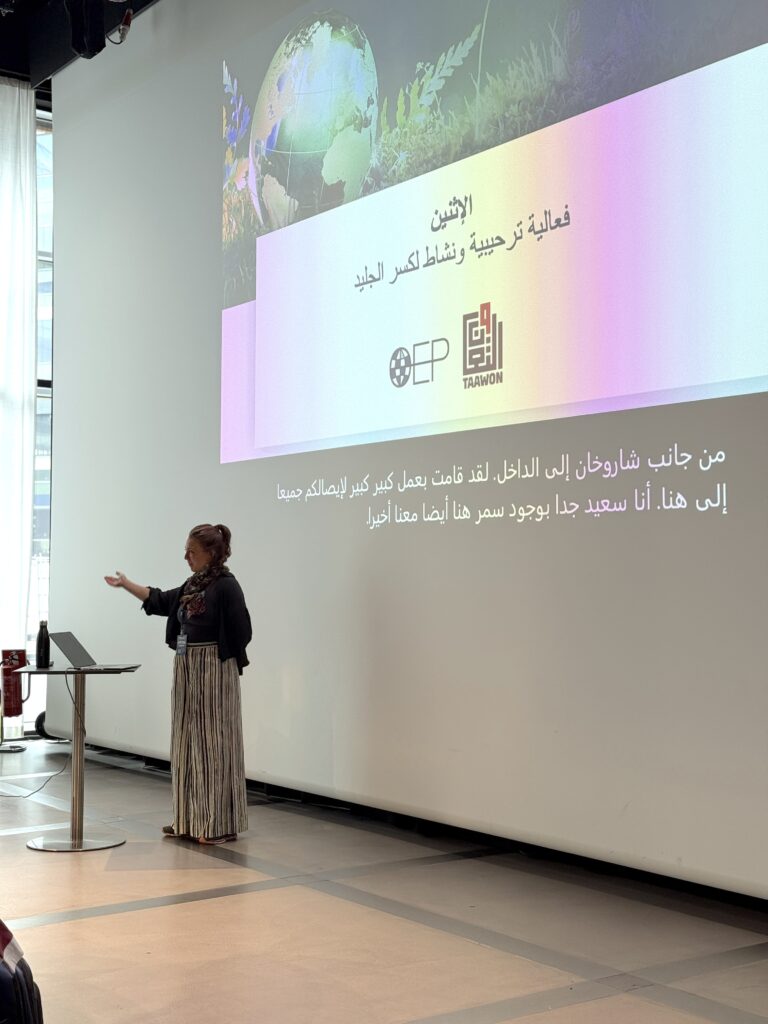
The challenge supercharged when we hosted over 65 participants in Finland for a four-day study visit. With only one of our three trainers speaking Arabic, and the participants speaking limited English, we had to break the language barrier.
We started with some brainstorming: what would we do directly in Arabic either way, and which are the parts that require interpretation? What information can we provide in written form and translate ahead of time? What kind of needs do we have on-the-spot? And, most importantly, where does having an interpreter truly add value?
After answering these questions and drafting different versions of the schedule (one where we had a full-time interpreter, another where we did not have one at all) we realized that there were quite a few moments where a full-time interpreter would not have formal tasks to do:
Because our goal was to improve hands-on STE(A)M education, we had to practice what we preached. We wanted World Cafés, post-its, and inquisitive learning – not just headsets and lectures.
Due to this approach, the interpreter’s day would have been patchy at best, and a lot of the information would be presented in visual form anyway, meaning that we could get it translated ahead of time.
What We Did Instead
Micro-Linguistics: You don’t need to be fluent to be effective. Learning key words like yes, no, school, student, skill, and numbers 1–5 (plus the incredibly versatile “problem/no problem”) built an immediate bridge of respect and understanding.
Preparation as Foundation: Every worksheet and reading material was translated in advance. We accepted that last-minute changes were part of the process, but the core content was locked and loaded.
Silent Discussions: We used “silent” methodologies like written World Cafés. Participants wrote their thoughts on flipcharts in Arabic, and we used Google Lens to join the conversation.
Action Over Explanation: We designed workshops where participants could feel the learning through activity, using translated slides only as a supporting anchor.
The Power of Tech: In addition to tools mentioned before, PowerPoint’s live subtitle feature worked wonders from English to Arabic – the other way around wasn’t as functional but we made it work. Those who spoke both languages kept an eye on the interpretation and filled in the emotional sentiment AI might miss.
The Human Network: Our participants were our biggest allies. When a word was missing, three other people would jump in to bridge the gap between English and Arabic.
The Bottom Line
Is it easier to run a workshop in your native tongue? Of course. In a language you don’t speak, a simple glance at the chat becomes a five-click process.
But the extra effort is where the magic happens. By using every tool at our disposal, from high-end professional interpretation to the phone in our pockets, we didn’t just deliver a training. We proved that if the content is valuable and the methodology is sound, language is no longer a wall; it’s just another bridge to cross
With the continuous development of AI tools and technologies, we truly believe that this is only the beginning. Perhaps sometime not-so-far in the future we will be able to facilitate multilingual training where each participant would be able to join in their native tongue, without English being used as the middle man!

Written by:
Petra Pajala
Lead Expert, Education and Communications